
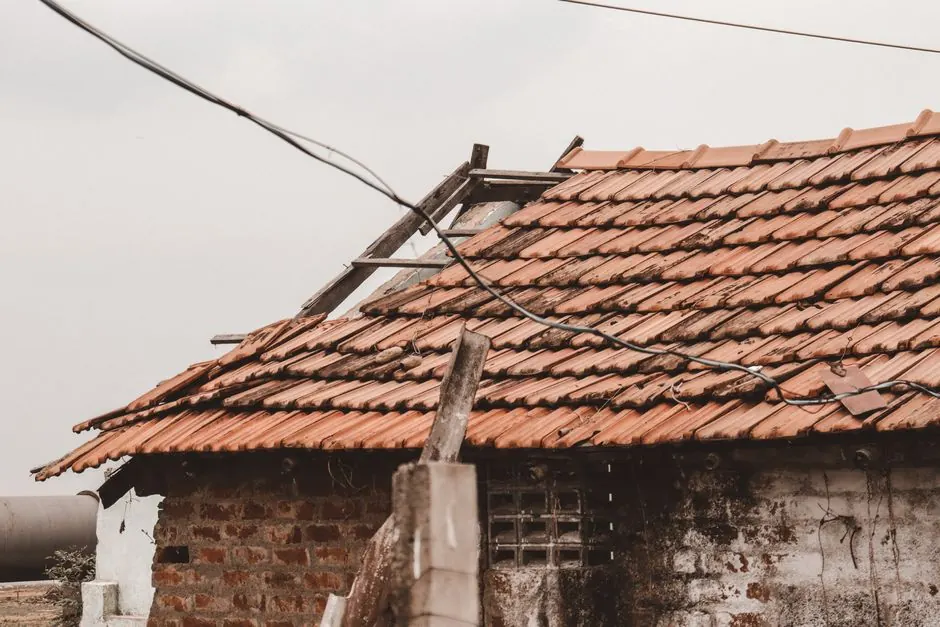
Your roof is missing shingles after a hail storm because hailstone impacts fracture the shingle mat and knock the protective mineral granules loose, and once that mat is cracked the shingle no longer holds its nails or its seal. The next gust of wind - even a 30 mph one - peels the damaged shingle off and drops it in your yard. That is the short answer. The longer answer involves how Texas hail behaves, what your insurance policy actually covers, and what you should do in the next 48 hours before the damage spreads.
We are Local Roofing Texas, and we have walked thousands of Texas roofs after hail events. Most homeowners assume wind ripped the shingles off. It did not. Hail set them up, and wind finished the job. If you understand that sequence, you will know exactly what to photograph, what to tell your adjuster, and when to call someone out.
Why is my roof missing shingles after a hail storm in Texas?
Why is my roof missing shingles after a hail storm in Texas comes down to three things: hail size, shingle age, and how the storm hit your slope. Texas sits in the heart of Hail Alley, the corridor running from the Panhandle down through Dallas, Fort Worth, Austin, and San Antonio where warm Gulf moisture collides with cold fronts. That collision produces hailstones the size of golf balls and baseballs, and those stones hit your roof at 70 to 100 mph.
When a 1.5-inch hailstone strikes an asphalt shingle, it does not just bounce off. It compresses the mat, cracks the fiberglass backing, and blasts the granules away in a circular pattern. That is called an impact fracture. The shingle still looks attached from the ground, but the nail heads are now sitting in cracked material. One more storm - or one hot afternoon that softens the sealant strip - and the shingle slides free.
Older roofs fail faster. A shingle that has spent 15 Texas summers baking at 140°F on the deck has already lost most of its flexibility. Hail that would dent a 5-year-old roof will shatter a 15-year-old one. If your home was built before 2010 and has never had a roof replacement, you are in the highest-risk group after any hail event.
How hail actually knocks shingles loose
Hail damage missing shingles in Texas follow a predictable pattern once you know what to look for. The stone hits, the mat cracks, the sealant strip breaks, and the shingle becomes a sail. Here is the sequence we see on almost every roof:
- Impact. A hailstone larger than 1 inch strikes the shingle field, ridge, or hip. The granule loss is immediate.
- Mat fracture. The fiberglass reinforcing mat underneath cracks. You cannot see this from the ground, but it is the beginning of the end.
- Seal break. The thermal sealant strip that holds the tab down is compromised. On a 90°F day, that seal is already soft.
- Wind lift. The next storm - even a routine spring squall - gets under the loose tab and peels it back.
- Shingle loss. The tab tears free at the nail line and lands in your yard, your gutter, or your neighbor's lawn.
This is why Texas roof shingle loss hail events often show up as whole shingles in the grass rather than small tears on the roof. The evidence left the building. What stays behind is the exposed underlayment and the nail heads, which is exactly what your insurance adjuster needs to see.
We see this pattern most in the older subdivisions around Roofing in Houston, where 20- to 30-year-old three-tab roofs take a beating every spring. The same storm that dents a newer architectural shingle will strip a three-tab clean off.
How to spot hail damage on shingles in Texas
How to spot hail damage on shingles in Texas starts at ground level, not on the roof. You do not need to climb up there. Look for these signals after any storm that dropped stones bigger than a pea:
- Shingle tabs in the yard or gutter. Whole shingles on the lawn mean the damage is already advanced.
- Dark spots on the roof slope. Those are exposed mat areas where granules were knocked off.
- Dented gutters, downspouts, and vents. Soft metal dents at 1 inch and larger. This is the single best ground-level proof of hail size.
- Bruised or cracked caulk around pipe boots and vents. Hail hits those raised surfaces first.
- Granules in the gutter valleys. A handful of granules after a storm is normal wear. A cupful is hail.
If you see shingles missing on more than one slope, or missing shingles on the same slope in a cluster, that is a hail signature, not a wind signature. Wind damage usually strips one edge or one ridge. Hail punches holes across the whole field.
One more ground-level check: look at your AC condenser unit, your fence, and your mailbox. If those are dented, your roof almost certainly is too. Adjusters look at soft metals first because they are the easiest hail-size proof.
Does Texas insurance cover missing shingles from hail?
Does Texas insurance cover missing shingles from hail? Yes, in almost every case. Texas homeowner policies are required to cover hail damage to the roof, and missing shingles caused by hail are a covered loss. What matters is proving the shingles came off because of hail, not because of age or wear.
That proof is where most claims succeed or fail. Your adjuster will look for:
- Hail dents on soft metals (gutters, vents, flashing) that match the storm date.
- Impact marks on the shingle field, not just missing shingles.
- A storm report showing hail of 1 inch or larger at your address on the date you are claiming.
- Consistent damage across the roof, not isolated to one worn-out section.
Two Texas-specific rules trip people up. First, most Texas policies use a separate 1% to 2% wind and hail deductible, calculated on your dwelling coverage - so on a $400,000 home, your deductible could be $4,000 to $8,000, not the $1,000 you are used to. Second, Texas law gives you one year from the date of loss to file a hail claim in most policies, though some carriers shorten it. Do not sit on it.
If your claim gets denied, do not accept the first answer. We routinely help homeowners request a re-inspection with a Roof Inspection in Texas report that documents hail strikes the first adjuster missed. A written inspection with photos and measurements changes the conversation.
Can missing shingles cause roof leaks in Texas?
Can missing shingles cause roof leaks in Texas? Yes, and faster than most homeowners expect. A missing shingle exposes the underlayment, and Texas underlayment is usually a single layer of felt or synthetic paper. That layer is designed to shed minor moisture, not to be your roof.
Once the underlayment is exposed to sun, it dries, cracks, and shrinks within a few weeks. Then the next rain gets through. We typically see the first interior stains 2 to 6 weeks after a hail event that removed shingles, especially on south- and west-facing slopes that bake all afternoon.
Water does not always show up directly below the missing shingle. It runs along the deck, hits a rafter, and drips somewhere else. That is why a ceiling stain in your hallway can trace back to a missing shingle on the far side of the roof. If you are already seeing brown rings on the drywall, you need Roof Leak Repair in Texas before the decking rots. A $400 repair now beats a $4,000 deck replacement later.
How to fix missing shingles after hail in Texas
How to fix missing shingles after hail in Texas depends on how many shingles are gone and how old the roof is. There are three realistic paths:
1. Spot repair (1 to 10 shingles missing)
If a small cluster came off and the rest of the roof is in good shape, we can replace the individual shingles. We match the color and profile as closely as possible, nail them in the correct pattern, and seal the tabs. Typical 2026 pricing in this area runs $350 to $900 for a spot repair, depending on roof pitch and access. This is a same-day job.
2. Partial replacement (one slope or one section)
If hail stripped a whole slope, replacing individual shingles will not work - the color will not match and the surrounding shingles are already fractured. We replace the full slope or section. Expect $1,800 to $4,500 depending on square footage and material.
3. Full roof replacement
If the roof is 12 years or older and hail hit multiple slopes, replacement is usually the smarter financial call. A full replacement on a typical Texas home runs $9,500 to $18,000 in 2026 for architectural asphalt shingles. If your claim is approved, insurance typically covers most of that minus your deductible.
We handle all three. Our Hail Damage Roof Repair in Texas crews document the damage, tarp anything open, and work directly with your adjuster so you are not translating between two contractors.
What to watch out for after a Texas hail storm
The biggest mistake we see is homeowners waiting for the next storm to "prove" the damage. Do not. Once shingles are missing, the clock is running on your underlayment and your claim window.
Other traps:
- Storm-chasing contractors. Out-of-state crews flood Texas after every major hail event. They knock on your door, offer to "handle everything," and disappear before the warranty work is needed. Ask for a local address and a physical office.
- Signing a contingency contract before your claim is approved. In Texas, you are not required to sign anything to get an inspection. Do not sign away your rights to shop around.
- Paying a deductible to a contractor instead of your insurance company. That is illegal in Texas. Your deductible goes to the insurer, not the roofer.
- Ignoring the back slope. Hail almost always hits the west and south slopes hardest, but the north slope can lose shingles too. A partial inspection misses half the damage.
- Assuming your neighbor's claim result applies to you. Every roof, every policy, and every adjuster is different.
We see these issues most often in neighborhoods around Roofing in North Houston, where spring hail cells track along the I-45 corridor and hit the same subdivisions two or three times in a season. If you have already filed one claim, document everything for the next one.
When to call a professional
Call a professional the moment you see shingles in the yard, dark spots on the roof, or dents on your gutters. You do not need to wait for a leak. In fact, waiting is the expensive choice - water damage almost always costs more than the roof repair.
We offer free inspections after any hail event, and we will tell you honestly whether you have a claim or just a repair. If it is a repair, we do the repair. If it is a claim, we document it, meet your adjuster on the roof, and make sure nothing gets missed. Our team handles everything from Roof Repair in Texas to full replacements, and we have seen enough Texas hail to know the difference between a claim and a cash job in the first five minutes on the roof.
If your roof is actively leaking or you have a tarp situation that cannot wait, we also run Emergency Roofing Services in Texas around the clock. We will stop the water first, then figure out the repair plan.
Frequently Asked Questions
Why is my roof missing shingles after a hail storm in Texas?
Hailstones 1 inch or larger fracture the shingle mat and break the sealant strip. Once the seal is broken, the next wind lifts the shingle and tears it off at the nail line. Texas hail often hits at 70+ mph, so the damage compounds fast.
How to fix missing shingles after hail in Texas?
For 1 to 10 missing shingles, a spot repair runs $350 to $900 and takes a day. For a full slope, expect $1,800 to $4,500. If the roof is 12+ years old and multiple slopes are hit, replacement at $9,500 to $18,000 is usually the better call.
Does Texas insurance cover missing shingles from hail?
Yes. Texas homeowner policies cover hail damage to roofs, including missing shingles, minus your wind/hail deductible. Most Texas policies use a 1% to 2% deductible on dwelling coverage, and you generally have one year from the loss date to file.
Can missing shingles cause roof leaks in Texas?
Yes, often within 2 to 6 weeks. Missing shingles expose the underlayment, which dries and cracks under Texas sun. The first interior stains usually show up on south- and west-facing slopes, and water can travel along rafters before it drips inside.
Who repairs hail damaged roofs in Texas?
Local Roofing Texas repairs hail-damaged roofs across the state. We handle spot repairs, partial slope replacements, full replacements, and insurance documentation. Call (888) 842-0089 for a free inspection after any hail event.
Get help with Roofing in Texas
If your roof is missing shingles after a hail storm, do not wait for the next rain to find out how bad it is. We will inspect it for free, document the damage for your claim, and give you a straight answer on repair versus replacement. Call Local Roofing Texas at (888) 842-0089 and we will get a crew on your roof this week.