
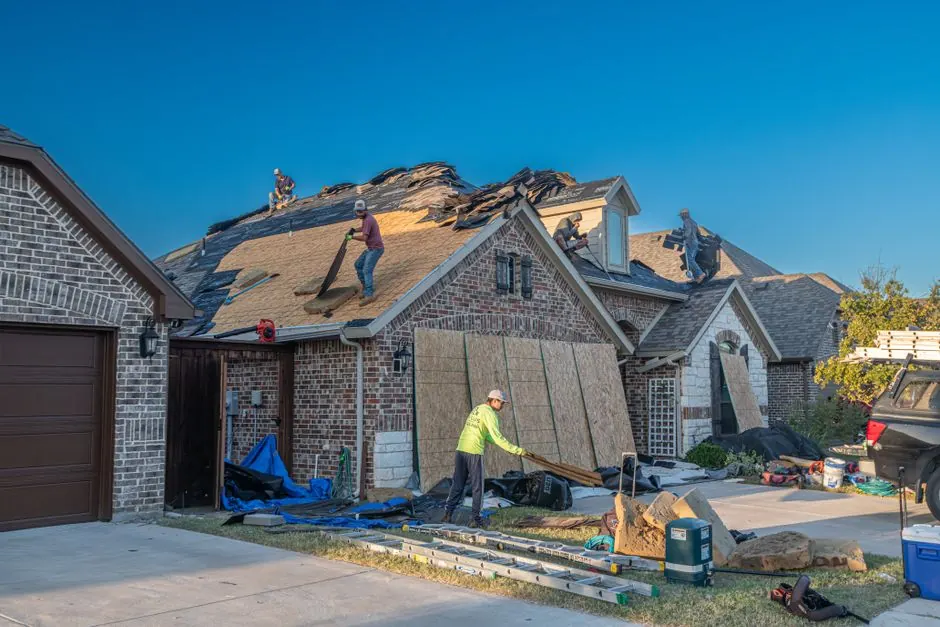
Emergency roof repair in San Antonio what to do first comes down to three moves: get everyone away from the leak, stop the water from spreading inside, and get a tarp on the roof before the next rain band hits. That is the whole answer. Everything below is how you do those three things without making the damage worse or giving your insurance adjuster a reason to trim the claim.
San Antonio sits in one of the most hail-prone corridors in the country, and our storm season runs from March through October with a second wind event pattern in late fall. When a cell drops two-inch hail on a 20-year-old three-tab roof in Alamo Heights or a wind gust peels back ridge cap in Stone Oak, you have roughly 30 minutes to make good decisions. Here is the order we tell homeowners to follow.
What to Do First: The First 30 Minutes
Your first 30 minutes should be spent on safety and containment, not on climbing the roof. The single biggest mistake we see after every Bexar County storm is a homeowner on a wet ladder in the dark. Roof pitch on a typical San Antonio ranch home runs 4:12 to 6:12, and a wet shingle surface has about the same traction as a sheet of ice.
- Move people and pets out of the leaking room. Water follows the path of least resistance and often travels along a joist before it drips, so the ceiling stain may be 6 feet from the actual breach.
- Kill power to affected circuits. If water is anywhere near a ceiling fan, recessed light, or outlet, flip the breaker for that zone. Do not wait to see sparks.
- Put a bucket under the drip and a tarp on the floor. A 5-gallon bucket catches roughly 2 gallons per hour from a slow drip; a fast storm leak can fill it in 20 minutes.
- Take photos and video before you move anything. Timestamped phone photos of the ceiling stain, the wet drywall, and the floor damage are the backbone of a storm claim.
- Call for emergency tarping. A tarp stops the water; nothing else you do inside the house matters if the roof keeps feeding the leak.
If you are not sure whether the damage justifies a callout, our team handles Emergency Roofing Services in Texas around the clock and will tell you straight on the phone whether you need us tonight or can wait for morning.
How Do You Stop Water From Spreading Inside the House?
You stop interior spread by interrupting the water at the ceiling, not by chasing it across the floor. Once a leak is running, water wicks through drywall, insulation, and framing faster than most people expect. A 1/8-inch gap in flashing can push 5 to 10 gallons into an attic in a single hour of hard rain.
Here is what actually works:
- Pierce a sagging ceiling bubble. If the drywall is bulging with trapped water, put a small hole in the center with a screwdriver and a bucket underneath. A controlled pinhole beats a 4-foot collapse at 2 a.m.
- Pull back wet insulation. Blown-in attic insulation holds water like a sponge and keeps the framing damp. Bag it and toss it - it is not worth saving.
- Run fans and a dehumidifier. Mold can start colonizing wet drywall in 24 to 48 hours in San Antonio's humidity. Moving air buys you time.
- Do not run your HVAC to dry the space. It pulls moisture into the ducts and spreads the smell through the whole house.
If the leak is coming through a valley, a chimney, or a vent boot, the fix is usually a targeted repair rather than a full replacement. We handle that as Roof Leak Repair in Texas and can usually trace the entry point in under an hour with a hose test.
When Is a Roof Emergency Actually an Emergency?
A roof problem is a true emergency when water is entering the living space, when structural members are exposed, or when the damage is spreading faster than you can contain it. Everything else can usually wait for a scheduled visit - and waiting often saves you money.
Call for 24/7 help tonight if any of these are true:
- Water is dripping through a ceiling, light fixture, or wall.
- You can see daylight through the roof deck from inside the attic.
- A section of shingles, ridge cap, or fascia is missing or hanging.
- A tree limb is resting on the roof or has punctured the deck.
- The ceiling is sagging or bulging.
You can usually wait until morning if the damage is limited to a few lifted shingles, granules in the gutter, or a cosmetic dent in a vent. Those are real problems, but they are not going to destroy your house overnight.
One thing to know about our area: the housing stock varies enormously. Older bungalows inside Loop 410 often have original 1x6 plank decking and 3-tab shingles that fail differently than the architectural shingles on newer builds out in the Roofing in San Antonio suburbs. A 20-year-old roof in one neighborhood and a 6-year-old roof in another can react to the same hailstorm in completely different ways.
What Does Emergency Roof Repair Cost in San Antonio in 2026?
Emergency roof repair in San Antonio in 2026 typically runs $350 to $1,200 for a targeted leak fix, $450 to $900 for emergency tarping on a standard single-family roof, and $1,500 to $4,500 when the repair involves decking, flashing, or a partial re-roof. After-hours and weekend calls add roughly 15 to 25 percent.
Here is how the numbers break down by job type:
- Emergency tarp (up to 1,000 sq ft): $450-$900, including labor and materials.
- Leak diagnosis and minor repair: $350-$750.
- Vent boot or pipe flashing replacement: $250-$500.
- Chimney flashing rebuild: $600-$1,400.
- Decking replacement (per sheet of 7/16 OSB): $75-$150 installed.
- Partial re-roof over a damaged section: $1,500-$4,500.
Two things drive the price more than anything else: how steep the roof is and how much decking has to come up. A 4:12 ranch is a different job than an 8:12 two-story. If you want a ballpark before we arrive, our Roof Repair in Texas page lays out the same ranges we quote on the phone - no surprise line items.
Does Insurance Cover Emergency Roof Repair in San Antonio?
Yes, most Texas homeowner policies cover emergency roof repair when the damage comes from a covered peril - hail, wind, fallen limbs, or fire. Normal wear, age, and poor maintenance are excluded, and that distinction is where most denied claims come from.
What you need to do in the first 24 hours:
- Call your insurer and open a claim. Most carriers let you file online, but a phone call creates a timestamped record.
- Document everything before cleanup. Photos, video, and a written list of damaged items. Do not throw away the wet drywall until the adjuster has seen it.
- Keep your receipts. Emergency tarping, hotel stays if the house is uninhabitable, and temporary repairs are usually reimbursable under the "reasonable expenses" clause.
- Get a written scope from a roofer. Adjusters work from scopes. A roofer who documents hail hits, granule loss, and soft decking gives the adjuster something concrete to approve.
Texas also has a statutory deadline: carriers must acknowledge a claim within 15 days and either approve, deny, or request more information within 15 business days after that. If your claim stalls, a documented scope from a licensed contractor is the fastest way to unstick it.
After a major hail event, we run full Hail Damage Roof Repair in Texas inspections and write the same scope we would use for our own crews. That document is what adjusters respond to.
Common Mistakes Homeowners Make During a Roof Emergency
The most expensive mistakes happen in the first hour, and they almost always involve someone on the roof who should not be there. We have seen homeowners turn a $600 repair into a $9,000 replacement by walking a wet roof in flip-flops.
Watch out for these:
- Climbing the roof during the storm. Wait for the rain to stop, and even then, only if you have a stable ladder and flat, dry footing.
- Using a garden hose to "test" the leak. You will add water to an already saturated attic and confuse the source.
- Patching with caulk or spray sealant. Those products fail within one or two rain cycles on a hot Texas roof.
- Signing a contract with a storm chaser. Out-of-state crews follow hail events. Ask for a local address and a Texas contractor license number before anyone touches your roof.
- Waiting for the "next storm" to file. Most policies require prompt notice. Delays of more than a few weeks can give the carrier grounds to reduce or deny the claim.
- Throwing away damaged materials. Wet insulation, shingles, and decking are evidence. Keep them until the adjuster signs off.
If you are unsure whether a repair is worth filing, call us before you call the insurer. We will tell you if the damage is below your deductible - no reason to open a claim that will not pay out.
When to Call a Professional
Call a professional the moment water is inside the house or the roof structure is compromised. Those are the two conditions that separate a repair from a rebuild, and both get worse by the hour.
Local Roofing Texas sends licensed crews across Bexar County and the surrounding areas, and we handle emergency tarping, leak diagnosis, and storm damage documentation in a single visit. We find the entry point, stop the water, and photograph everything for your claim before we leave. If the roof can be repaired, we repair it. If it needs to be replaced, we tell you that straight and show you why.
For homeowners who want to understand the full picture before committing, our Roof Inspection in Texas service includes a written report on decking, flashing, and shingle condition - the same report adjusters ask for after a storm.
Frequently Asked Questions
What should I do first for emergency roof repair in San Antonio?
Get people away from the leak, kill power to affected circuits, and put a bucket under the drip. Then call for emergency tarping - stopping the water at the roof is what actually protects the house. Photos before cleanup protect your claim.
Who offers 24/7 emergency roof repair in San Antonio?
Local Roofing Texas answers calls 24/7, including weekends and holidays, and dispatches tarping crews across Bexar County. Most emergency calls are on-site within 2 to 4 hours, faster during normal business hours.
How much does emergency roof repair cost in San Antonio TX?
In 2026, expect $350-$1,200 for a targeted leak repair, $450-$900 for tarping, and $1,500-$4,500 if decking or flashing has to be rebuilt. After-hours calls add 15-25 percent.
Does insurance cover emergency roof repair in San Antonio?
Yes, when the damage comes from hail, wind, fire, or a fallen limb. Wear and age are excluded. File the claim within 24 hours, document everything, and keep receipts for tarping and temporary repairs.
How fast can a roofer respond in San Antonio?
For true emergencies, our crews typically arrive within 2 to 4 hours of your call. During major hail events, response can stretch to 6 to 8 hours - we triage by severity, so active water intrusion goes first.
Get Help With Roofing in San Antonio
If water is coming in right now, do not wait for the next rain band to make it worse. Call Local Roofing Texas at (888) 842-0089 and we will get a tarp on the roof, document the damage, and give you a straight answer on repair versus replacement.